


China Maritime Report #52: Everything Everywhere All At Once — The Growing Complexity of PLA Amphibious Exercises
The PLA landed in three places at once during its annual Amphibious Warfare Capstone Exercises, roughly 360 km apart — about Taipei to Kaohsiung — against obstacles matching Taiwan's coast. A rehearsal.

May 19th - Select Committee on the CCP
600+ vessels in coordinated East China Sea formations, buoys in the Yellow Sea, sustained South China Sea patrols. A decade of coercion below threshold.

OP-ED: 中国が仕掛ける海の「非正規戦」に対抗するには
China's irregular war at sea is not improvised. It is rehearsed, scored and repeated until the window for a proportionate response closes on its own.
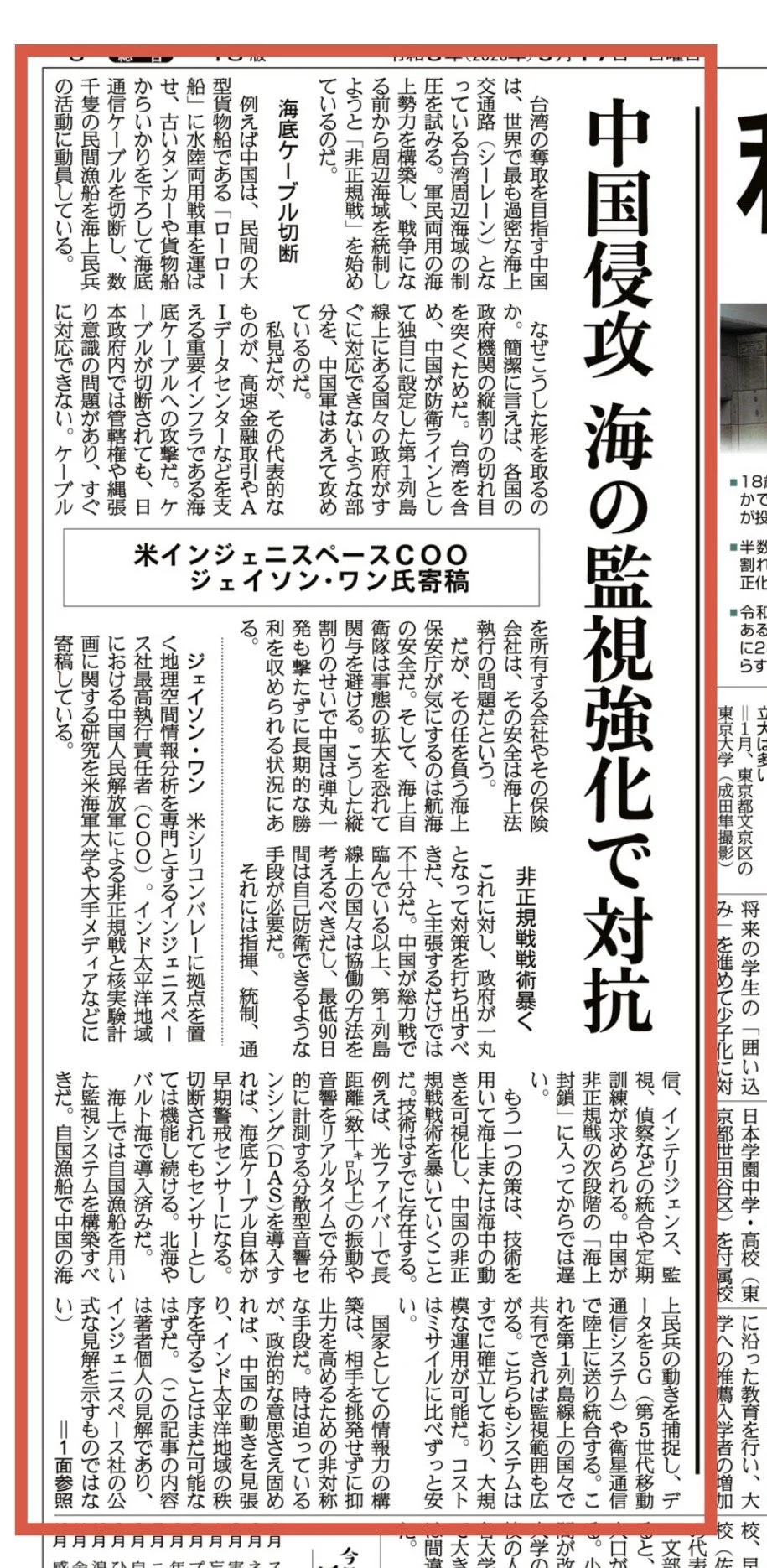
OP-ED: 中国侵攻 海の監視強化で対抗
You cannot deter what you cannot see. Countering an invasion of Taiwan can only be stopped if you can see the signals - Taiwan still needs to contribute to the Allied Intelligence, Surveillance, Reconnaissance architecture not just rely on it.
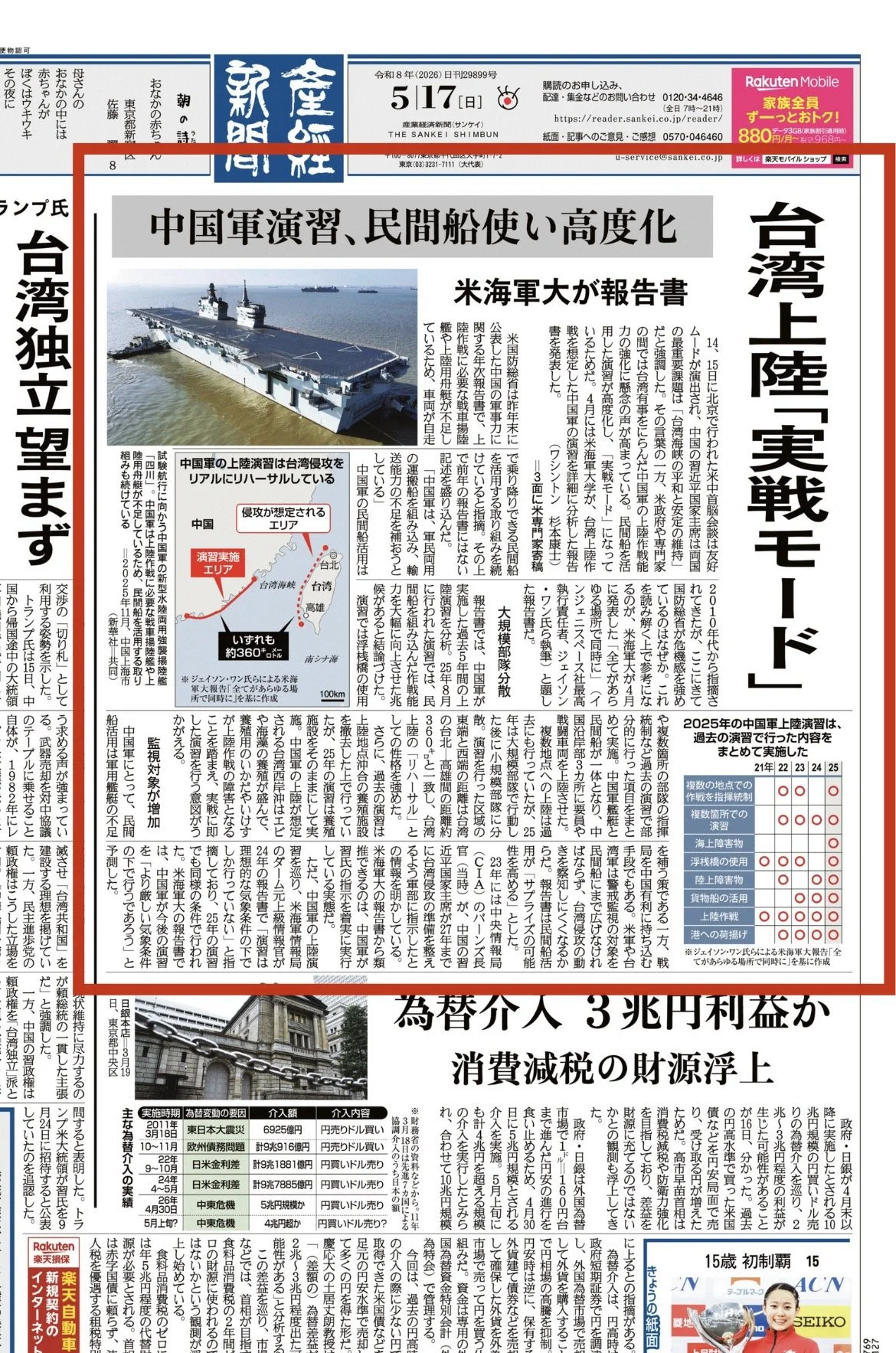
中国軍演習、民間船使い高度化
PLA exercises are growing sophisticated in a specific way: they run on dual-use civilian shipping. Capability that appears in no order of battle - reducing the reaction time of Taiwan military.
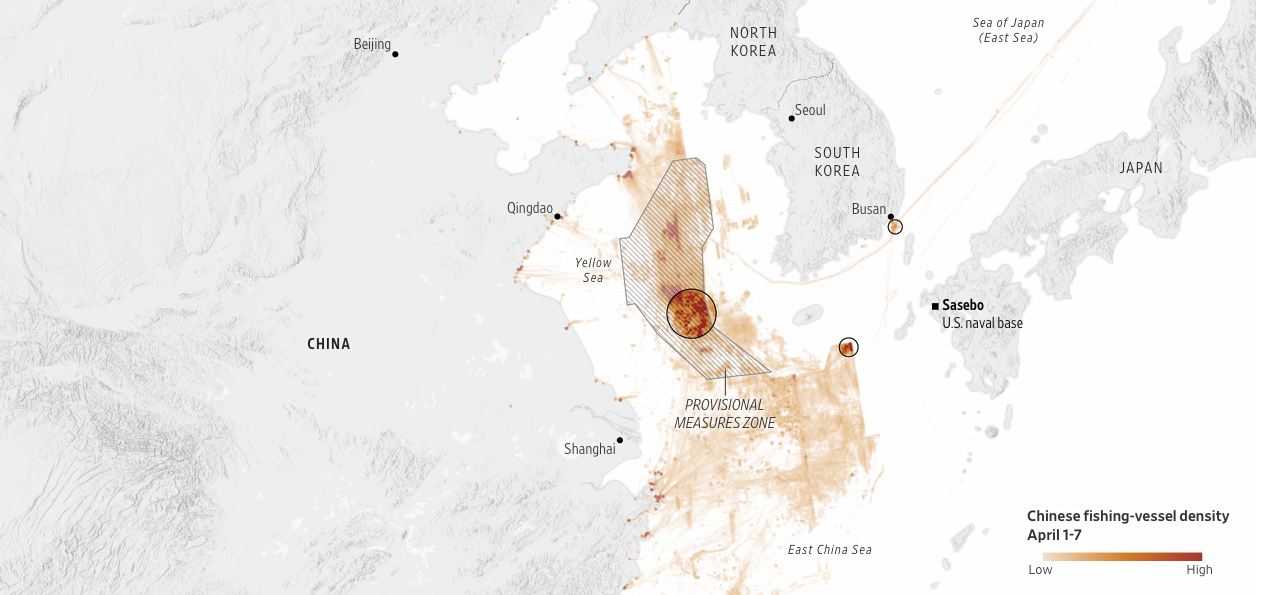
See How China Is Gaining Power in Contested Waters - Chinese fishing vessels pushed within 150 miles of a U.S. naval base in Japan last month, the latest maneuver in a decades long campaign
About 200 Chinese fishing boats—part of China’s state-directed maritime fleet—recently pushed further east in the Yellow Sea. Some came within 150 miles of the Japanese city of Sasebo, home to a core U.S. naval base, according to ship-tracking data provided by geospatial analysis firm ingeniSPACE and verified by The Wall Street Journal.

Maritime Executive: China's Naval Drills Show Growing Focus on Capturing Taiwan
Years of drills near Taiwan simulated blockade and landing. The recent round reads differently — less signaling, more rehearsals, more taking and holding.
[PRC STATE MEDIA] Global Times —Distorted reading in ulterior motive: Multiple [PRC] sources refute Western media's lie of 'Chinese fishing boasts militarily massing in East China Sea'
PRC state media has rebutted the AFP and New York Times reporting our analysis supported. A state-media denial is itself a data point worth reading.
Iranian Spoofing Lessons for China
AIS spoofing is a skill, and Iran and Russia have been teaching to China. What the PLA learns at Hormuz will surface in the Indo-Pacific.
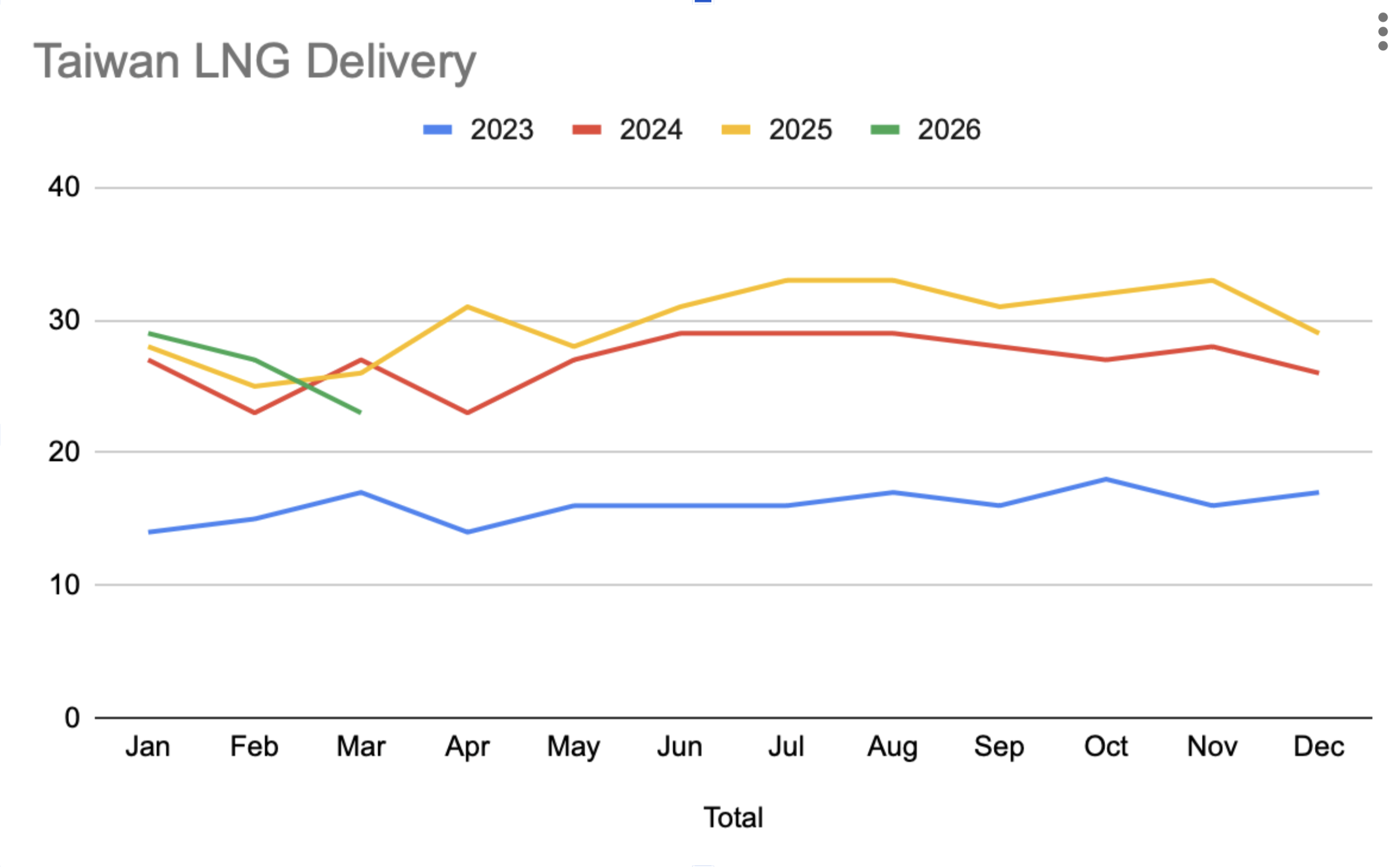
The Blockade of the Strait of Hormuz - LNG Headaches for Asia
The blockade of the Strait of.Hormuz is not a Persian Gulf problem — it is an Asian energy problem with a Gulf trigger, and the exposure is not evenly distributed.
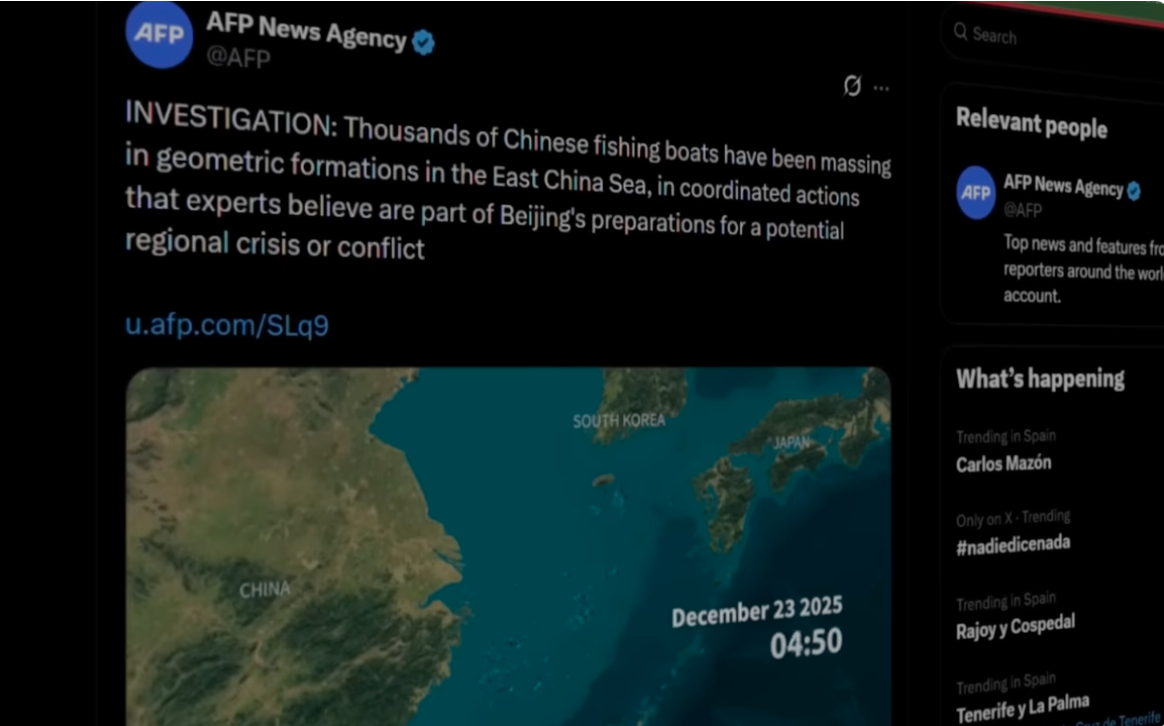
China Just Tested Its Invisible Navy… And No One Noticed
Like Christmas Day, we woke to find a surprise - our work was being covered by a Youtuber.
Consider the following How much of China's Irregular Warfare can be seen by conventional vessel tracking ? The fleet that matters is often the one not transmitting.
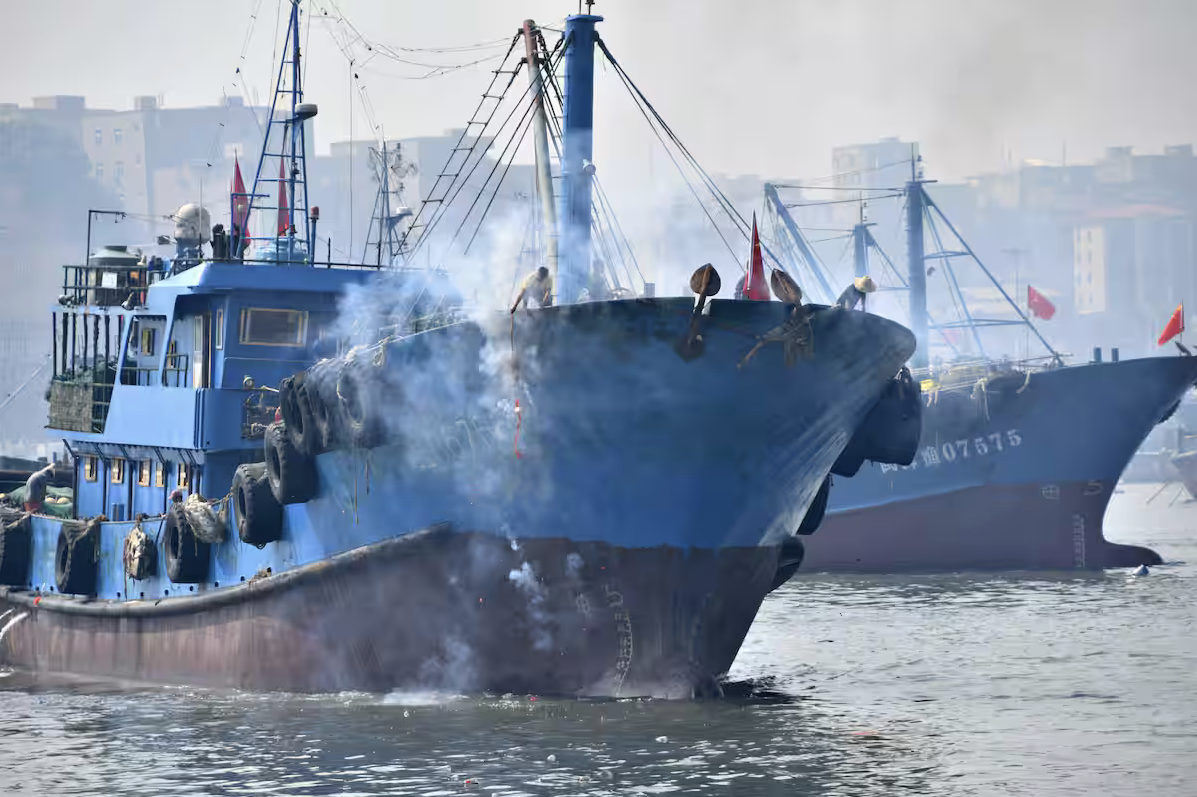
中国漁船1200隻、東シナ海で反転「L字型」隊列 3月1~3日、米国排除へ準備行動か
On March 1-3, Chinese Maritime Militia continued to exercise in the East Sea, possibly timed to send a message to the US and Japan.
The abnormal fishing formations cross PLA military theatre boundaries — which points to military planning directed above theatre level. There is nothing local about it. It’s just fishy.
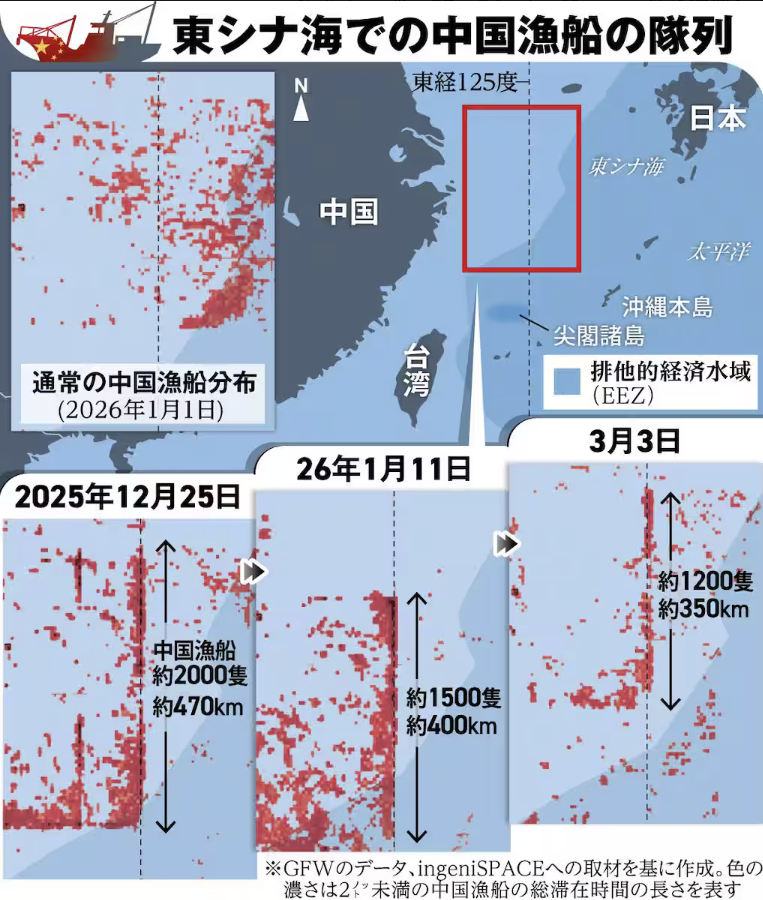
人民解放軍の戦区またぐ動員に「上層部」の影…中国漁船の異常隊列、日本の脅威に
Twice — late 2025 and again in January — up to 2,000 fishing boats formed a wall near the median line. We built the case from AIS and satellite imagery.
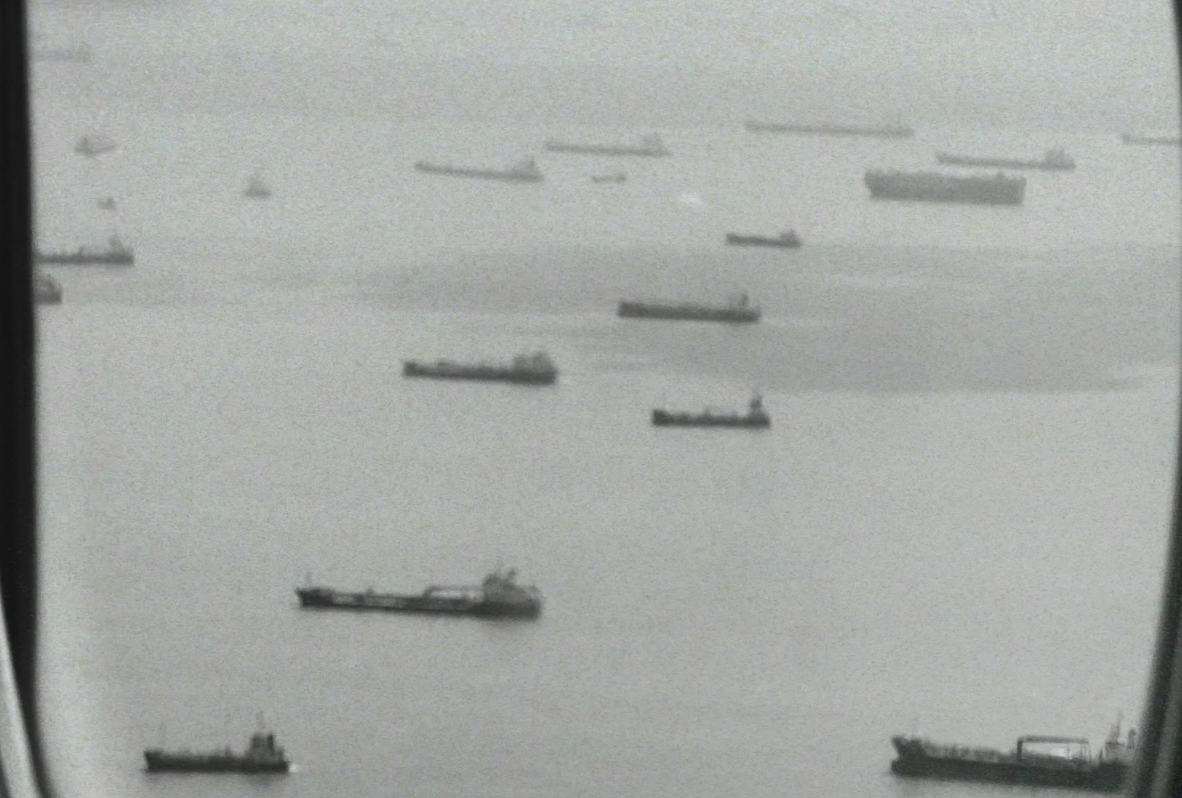
Thousands Of Chinese Boats Mass At Sea, Raising Questions
Thousands of Chinese fishing boats, massing in large formations that stand hundreds of KM in the East Sea. Fleets cluster where fish are; they do not hold angles.
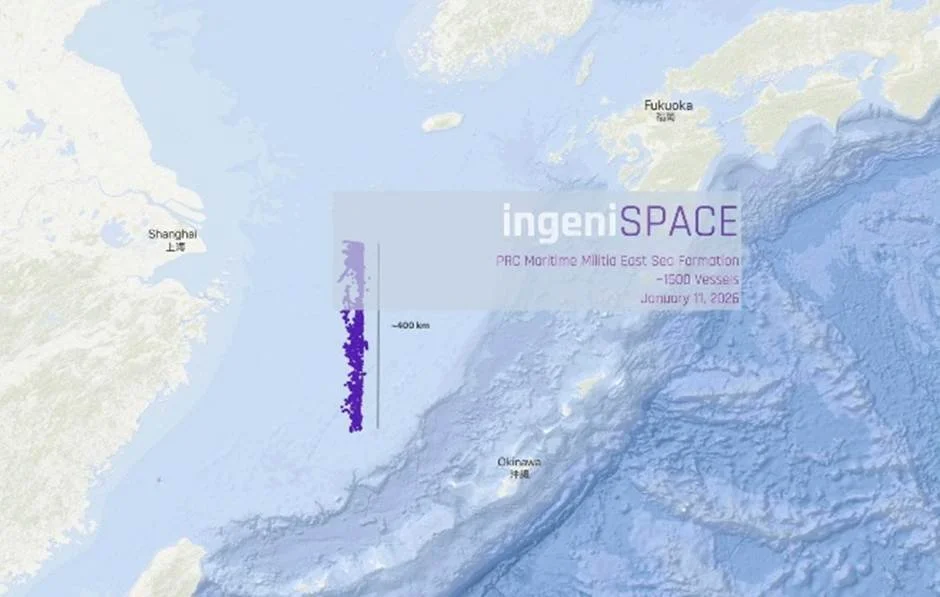
中国漁船2000隻が東シナ海で「異常な隊列」 2025年末、26年1月にも
Twice — late 2025 and again in January — up to 2,000 fishing boats in formation in the East Sea We built the case from AIS and satellite imagery.
U.S.-China Economic & Security Review Commission - China Bulletin: February 4, 2026
China is marshalling thousands of fishing vessels in drills that impede movement through the East China Sea. Obstruction is an underrated capability.

China appears set on militarizing another reef in the South China Sea
The geospatial firm ingeniSPACE first noticed the phenomenon, as 2,000 Chinese vessels created this formation from Dec. 25-27 in waters northeast of Taiwan.
This coordinated activity occurred just three days before China announced a major exercise circumscribing Taiwan. Dubbed Justice Mission-2025, the PLA exercise was designed to browbeat Taiwan and rehearse the implementation of a naval blockade.
Something similar took place from Jan. 9-12, when some 1,400 Chinese fishing boats formed a 200-mile-long “barrier” for more than 30 hours, according to automatic identification system data.
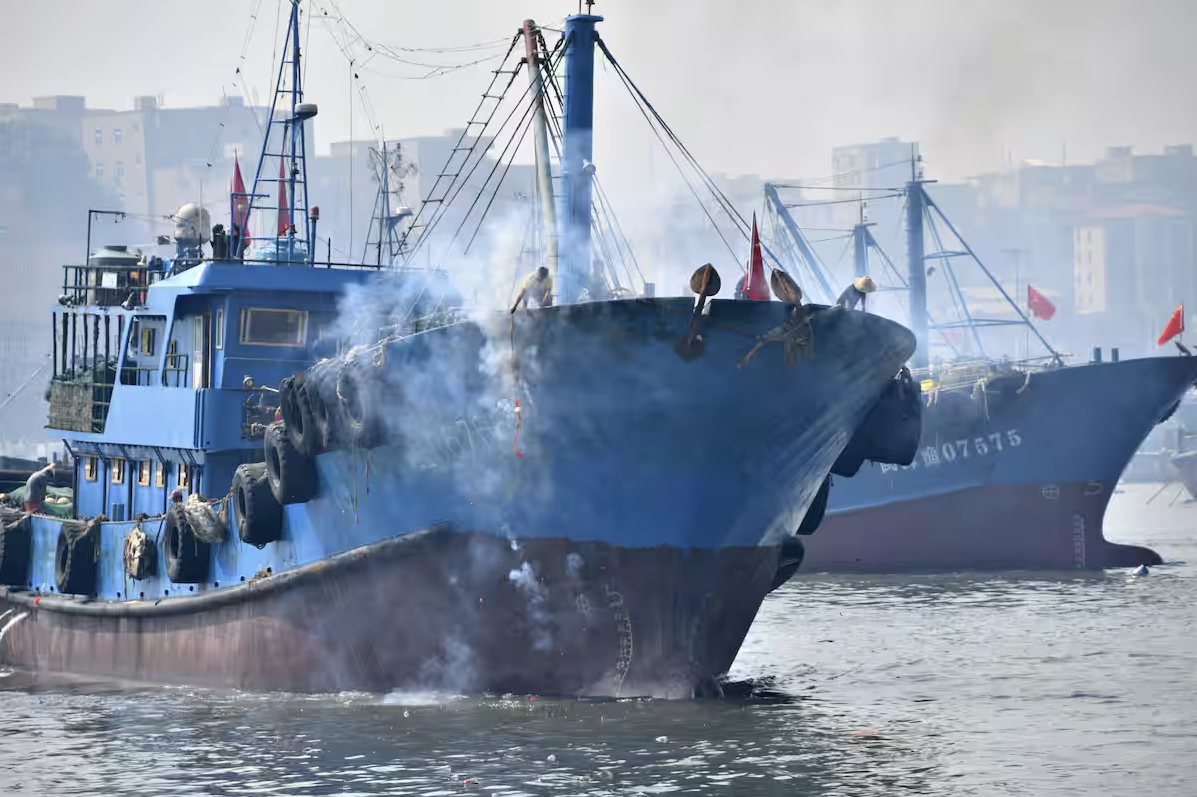
Thousands of Chinese Fishing Boats Quietly Form Vast Sea Barriers
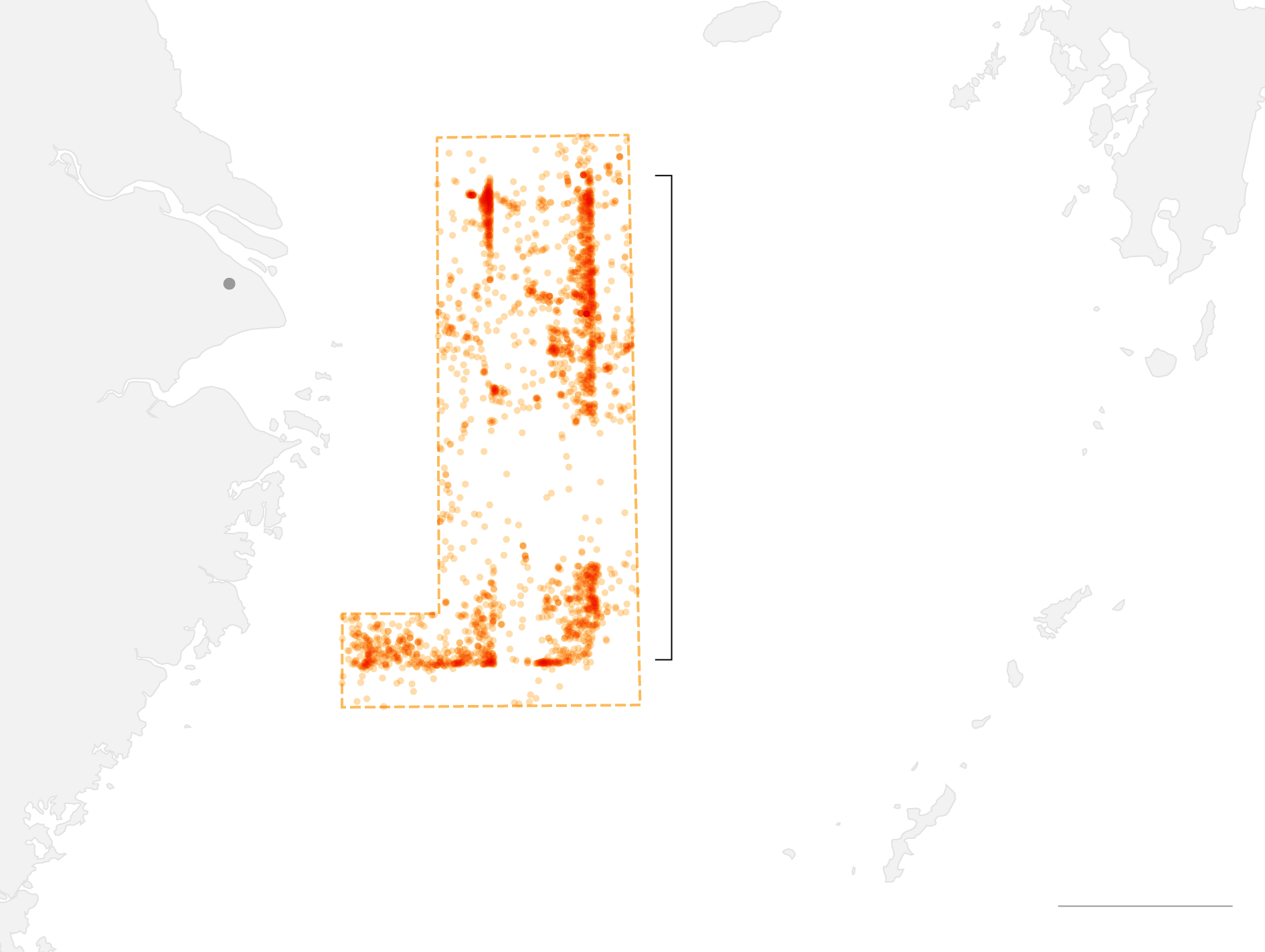
China quietly mobilized thousands of fishing boats twice in recent weeks to form massive floating barriers of at least 200 miles long, showing a new level of coordination that could give Beijing more ways to impose control in contested seas.
The two recent operations unfolded largely unnoticed. An analysis of ship-tracking data by The New York Times reveals the scale and complexity of the maneuvers for the first time.
Last week, about 1,400 Chinese vessels abruptly dropped their usual fishing activities or sailed out of their home ports and congregated in the East China Sea. By Jan. 11, they had assembled into a rectangle stretching more than 200 miles. The formation was so dense that some approaching cargo ships appeared to skirt around them or had to zigzag through, ship-tracking data showed.
OP-ED: Securing Taiwan’s submarine cables - Taipei Times
Distributed acoustic sensing (DAS) specifically addresses this challenge. DAS detects, classifies and tracks activity along the entire length of a cable by turning the cable itself into a sensor.
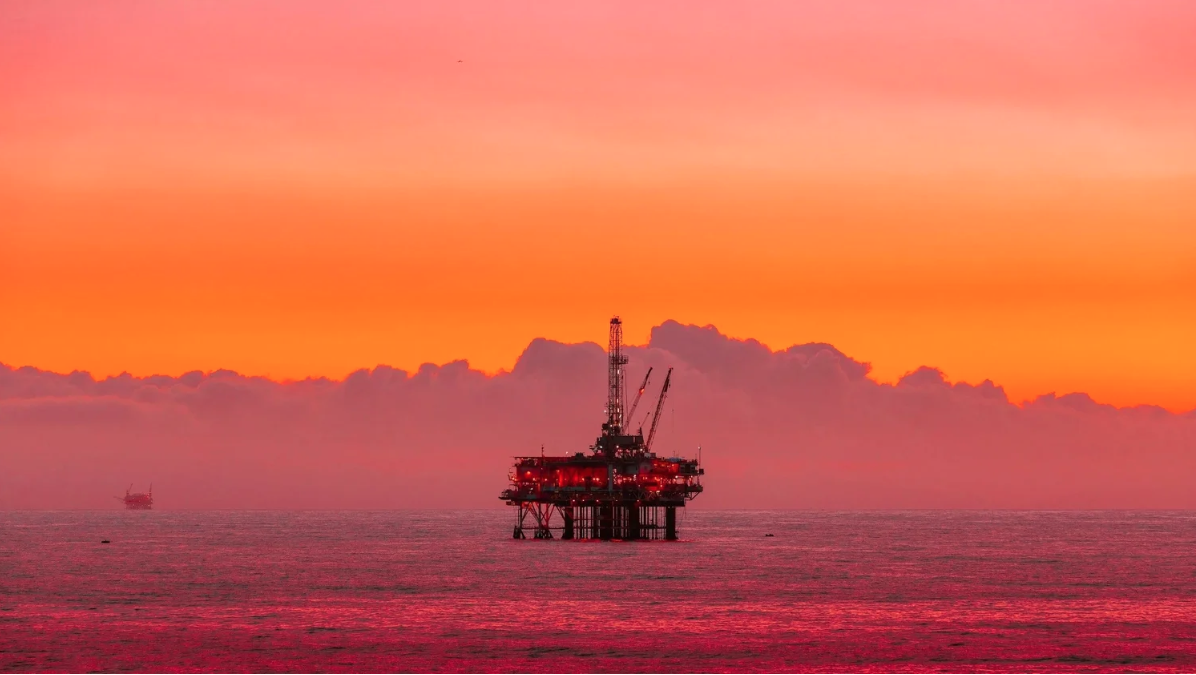
Rigging the Game: PRC Oil Structures Encroach on Taiwan’s Pratas (Dongsha) Island
Beijing’s relentless pressure on Taiwan now includes oil rigs: twelve permanent or semi-permanent structures and dozens of associated ships. The structures, which are owned by state-owned firm CNOOC, include seven rig structures, three floating production storage and offloading (FPSO) vessels, and two semi-submersible oil platforms. All are located within Taiwan’s claimed exclusive economic zone (EEZ) near Pratas/Dongsha Island.