

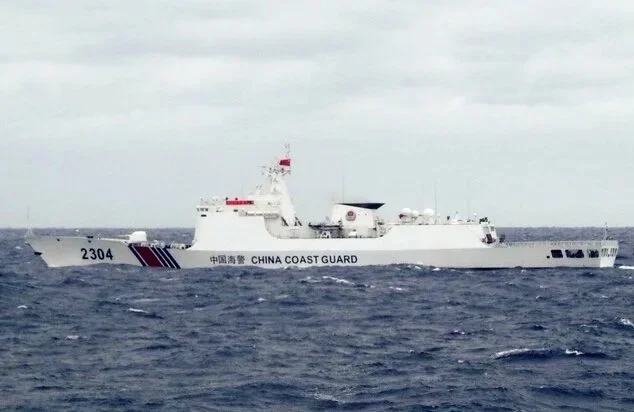
BREAKING: Chinese White-hulled Warships Escort Marine Survey in Taiwan, Japan and Philippine EEZs, Signaling a Challenge to First Island Chain
China Coast Guard ships have run "routine voyages" in Japan's EEZ south of Yonaguni since June. Calling it routine is how the precedent gets set.
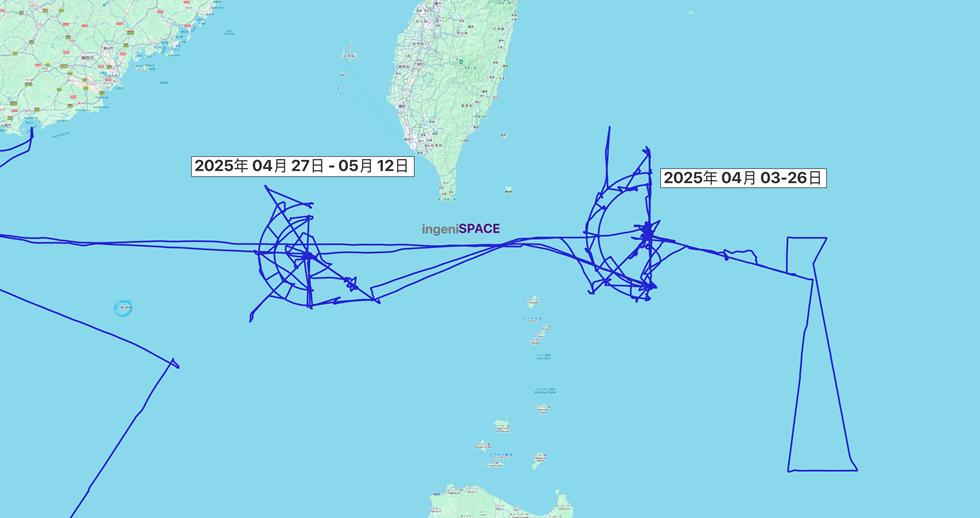
China’s Marine Survey Ships as a Security Challenge for Japan and the Region - Japan Institute for International Affairs (JIIA)
According to AIS data, the research vessel Zhong Shan Da Xue sailed through the South China Sea from May to June 2025. However, Sun Yat-sen University declared that the vessel was active in the South China Sea in August 2025, which contradicts the AIS data. The announcement stated that Sun Yat-sen University had conducted sea-trials of Haiqin, a remotely operated vehicle (ROV) capable of operating at depths of up to 6,000 meters, and that Zhong Shan Da Xue had deployed the Haidou-1 autonomous underwater vehicle (AUV) at the same time. This marked the first scientific survey conducted by coordinating two different unmanned vehicles via a single support ship14.
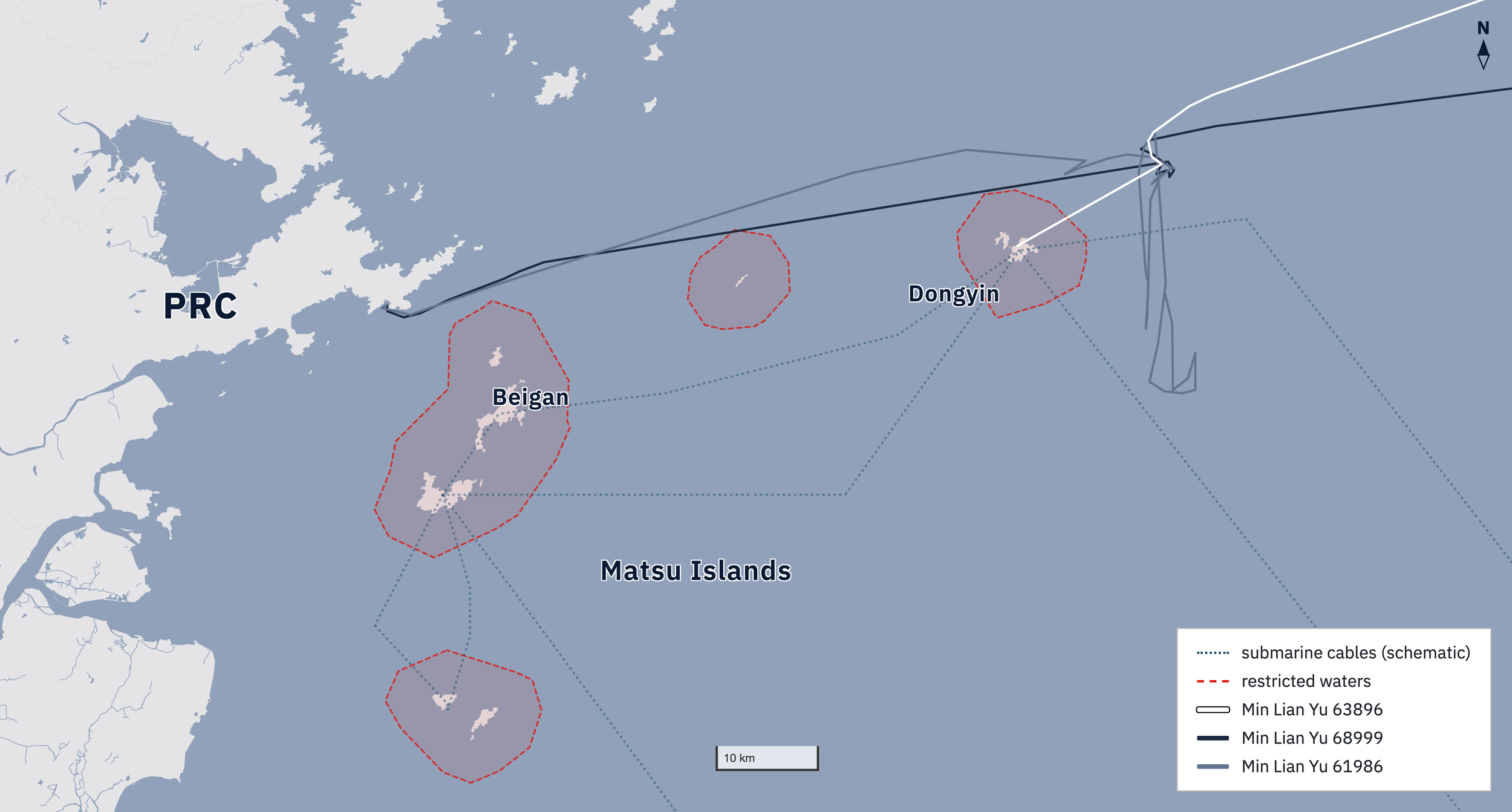
What Actually Caused the Latest Submarine Cut Near Taiwan?
Why use a warship when a fishing boat will do? Civilian hulls buy deniability, and each cable cut is small enough to absorb. That a feature not a bug. We spill the tea.
“China prefers ‘invisible hybrid warfare’ (隐形混合战) over kinetic warfare. Covert irregular warfare enables China the means to quietly overwhelm its targets not only physically but economically and politically as well – all without firing a shot. The use of civilian fishing vessels not only provide plausible deniability but legitimizes China’s claims and salami-slicing tactics as lawful and just.”

May 19th - Select Committee on the CCP
600+ vessels in coordinated East China Sea formations, buoys in the Yellow Sea, sustained South China Sea patrols. A decade of coercion below threshold.
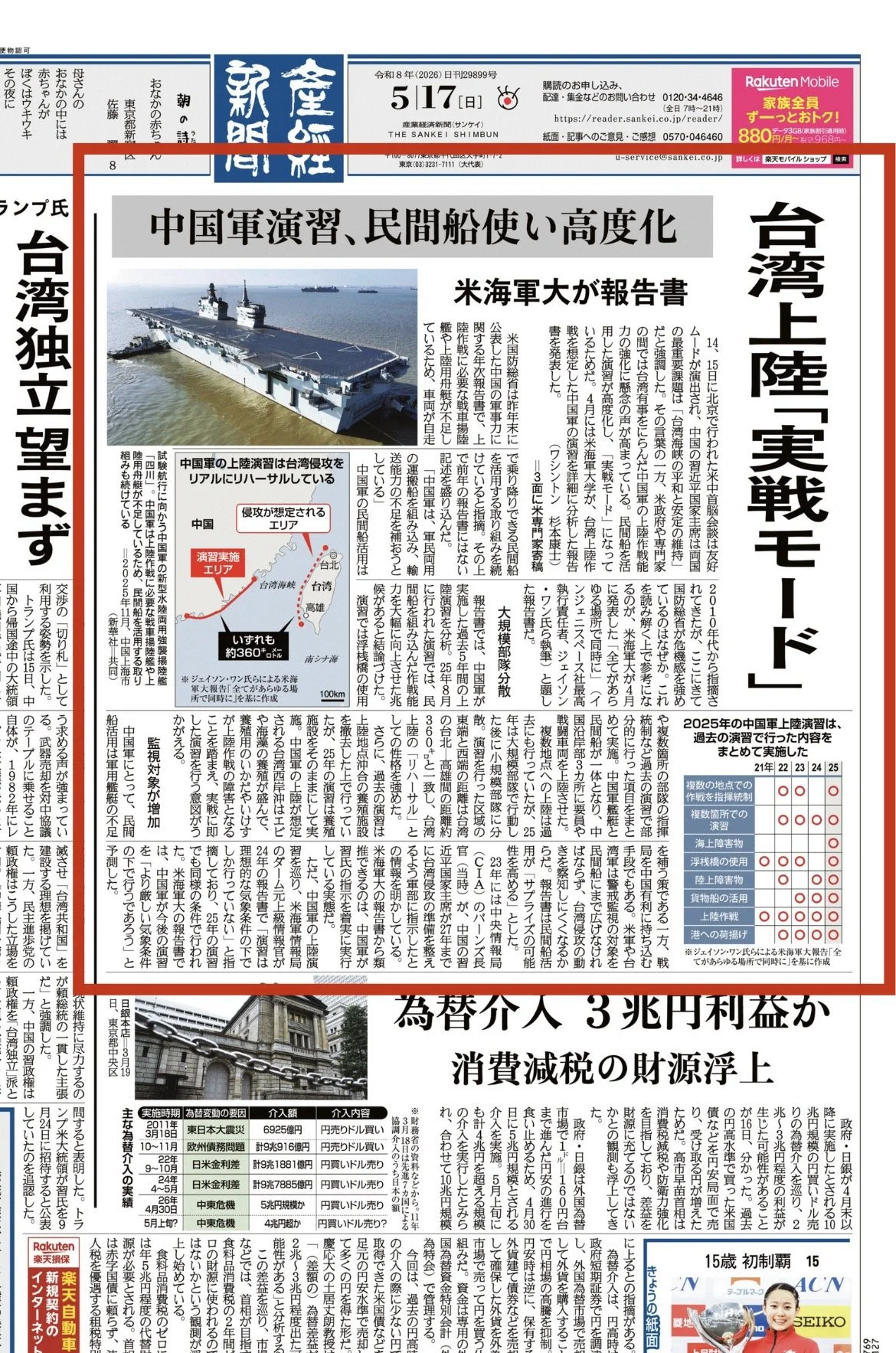
中国軍演習、民間船使い高度化
PLA exercises are growing sophisticated in a specific way: they run on dual-use civilian shipping. Capability that appears in no order of battle - reducing the reaction time of Taiwan military.
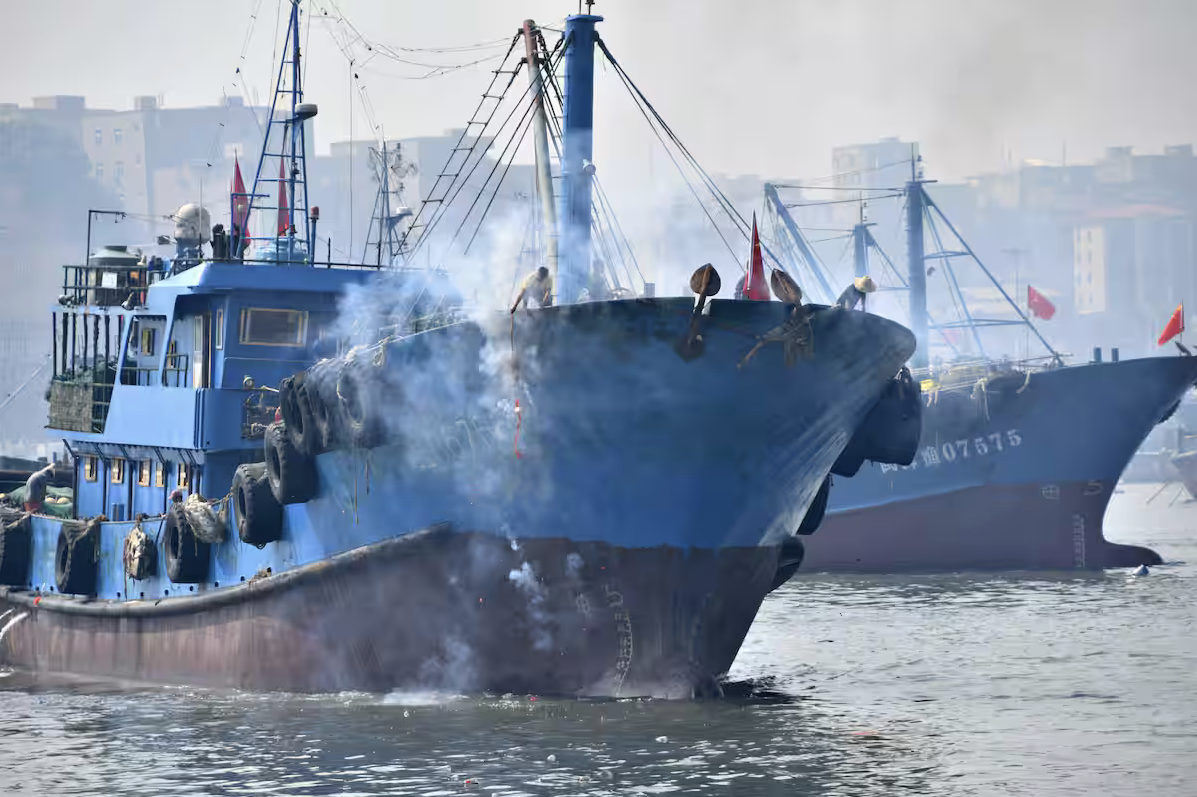
中国漁船1200隻、東シナ海で反転「L字型」隊列 3月1~3日、米国排除へ準備行動か
On March 1-3, Chinese Maritime Militia continued to exercise in the East Sea, possibly timed to send a message to the US and Japan.
The abnormal fishing formations cross PLA military theatre boundaries — which points to military planning directed above theatre level. There is nothing local about it. It’s just fishy.
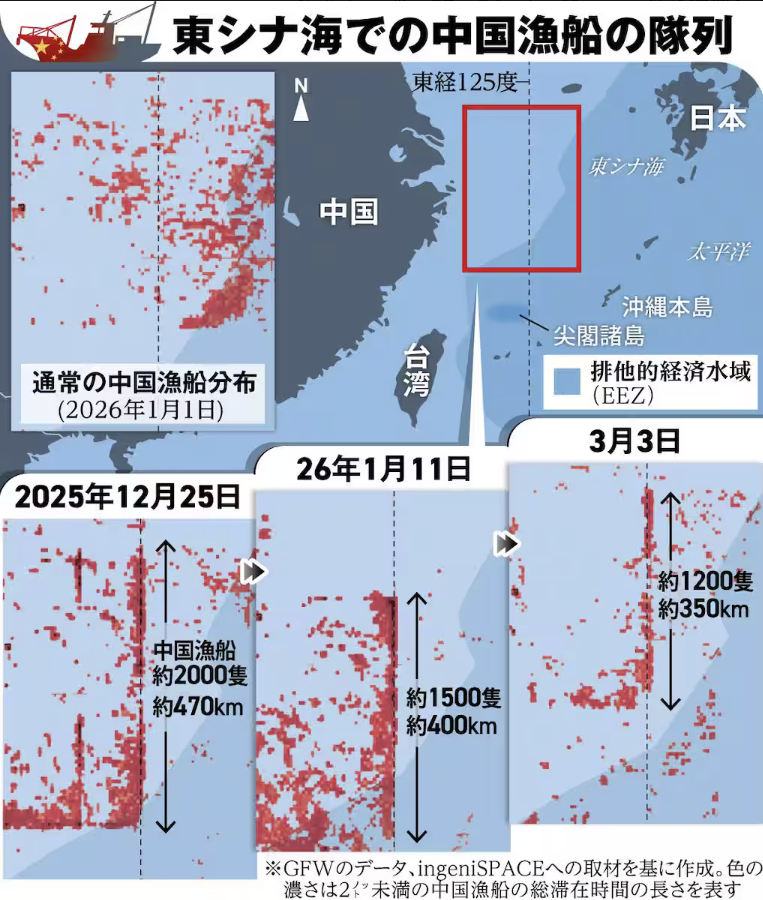
人民解放軍の戦区またぐ動員に「上層部」の影…中国漁船の異常隊列、日本の脅威に
Twice — late 2025 and again in January — up to 2,000 fishing boats formed a wall near the median line. We built the case from AIS and satellite imagery.

Rigging the Game: PRC Oil Structures Encroach on Taiwan’s Pratas (Dongsha) Island
Beijing’s relentless pressure on Taiwan now includes oil rigs: twelve permanent or semi-permanent structures and dozens of associated ships. The structures, which are owned by state-owned firm CNOOC, include seven rig structures, three floating production storage and offloading (FPSO) vessels, and two semi-submersible oil platforms. All are located within Taiwan’s claimed exclusive economic zone (EEZ) near Pratas/Dongsha Island.