

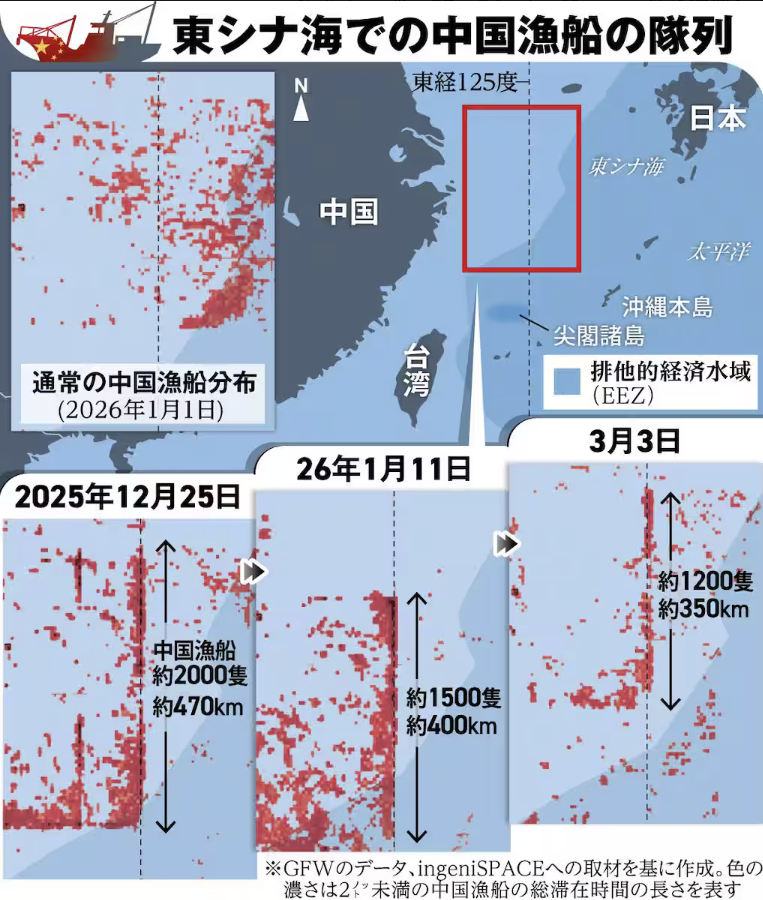
中国漁船1200隻、東シナ海で反転「L字型」隊列 3月1~3日、米国排除へ準備行動か
On March 1-3, Chinese Maritime Militia continued to exercise in the East Sea, possibly timed to send a message to the US and Japan.
The abnormal fishing formations cross PLA military theatre boundaries — which points to military planning directed above theatre level. There is nothing local about it. It’s just fishy.
人民解放軍の戦区またぐ動員に「上層部」の影…中国漁船の異常隊列、日本の脅威に
Twice — late 2025 and again in January — up to 2,000 fishing boats formed a wall near the median line. We built the case from AIS and satellite imagery.
Thousands Of Chinese Boats Mass At Sea, Raising Questions
Thousands of Chinese fishing boats, massing in large formations that stand hundreds of KM in the East Sea. Fleets cluster where fish are; they do not hold angles.
U.S.-China Economic & Security Review Commission - China Bulletin: February 4, 2026
China is marshalling thousands of fishing vessels in drills that impede movement through the East China Sea. Obstruction is an underrated capability.

China appears set on militarizing another reef in the South China Sea
The geospatial firm ingeniSPACE first noticed the phenomenon, as 2,000 Chinese vessels created this formation from Dec. 25-27 in waters northeast of Taiwan.
This coordinated activity occurred just three days before China announced a major exercise circumscribing Taiwan. Dubbed Justice Mission-2025, the PLA exercise was designed to browbeat Taiwan and rehearse the implementation of a naval blockade.
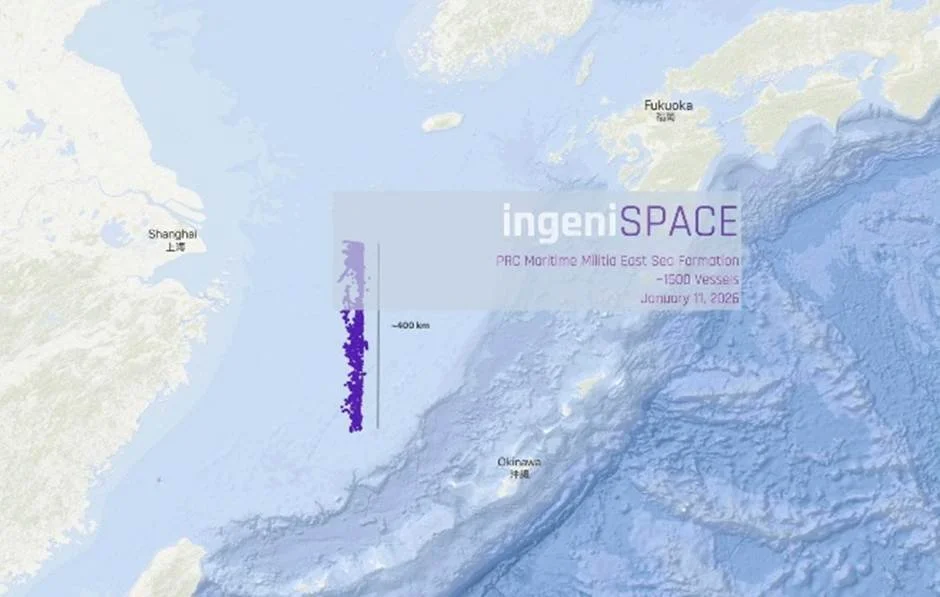
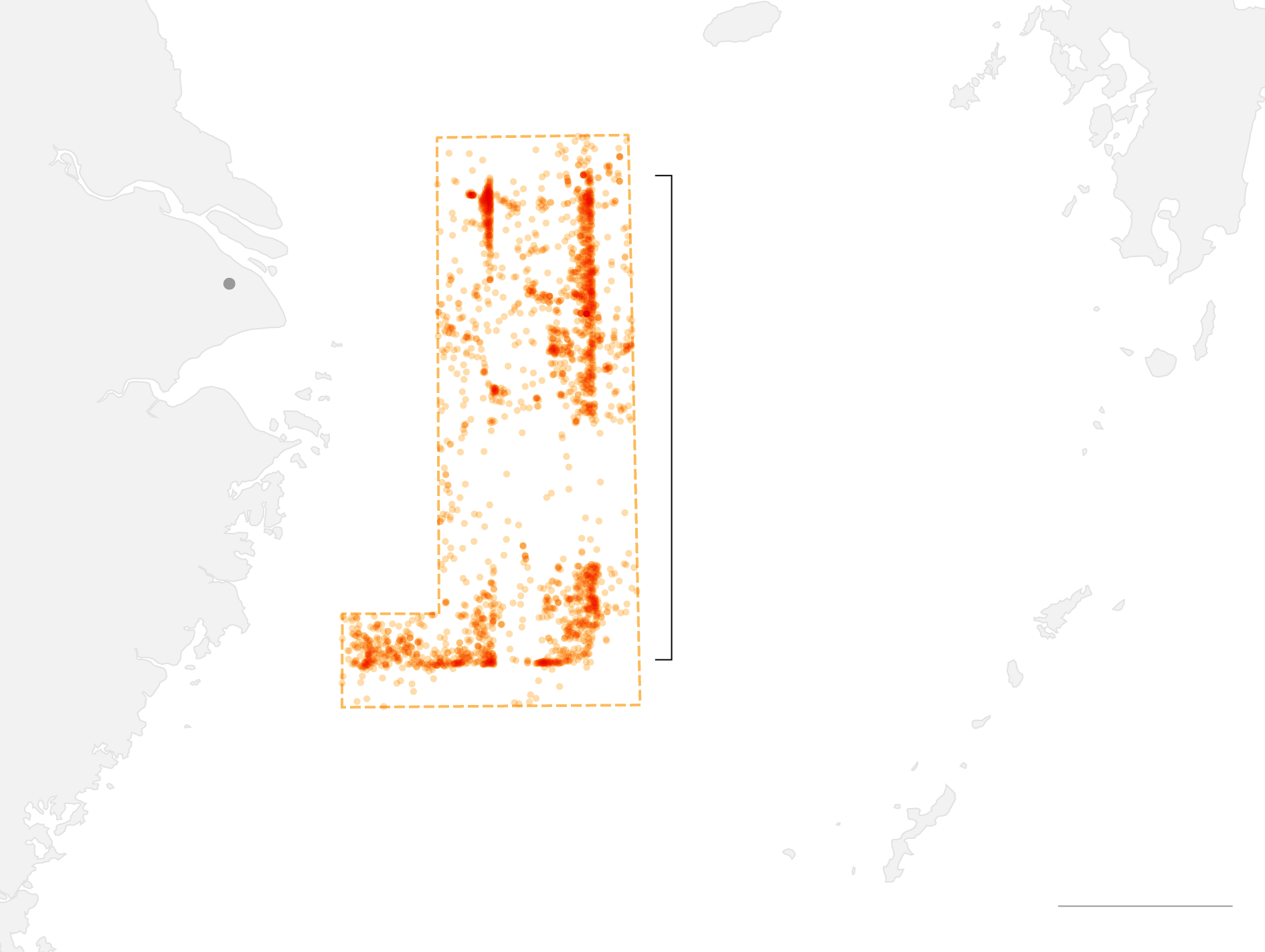
Something similar took place from Jan. 9-12, when some 1,400 Chinese fishing boats formed a 200-mile-long “barrier” for more than 30 hours, according to automatic identification system data.
Thousands of Chinese Fishing Boats Quietly Form Vast Sea Barriers
China quietly mobilized thousands of fishing boats twice in recent weeks to form massive floating barriers of at least 200 miles long, showing a new level of coordination that could give Beijing more ways to impose control in contested seas.
The two recent operations unfolded largely unnoticed. An analysis of ship-tracking data by The New York Times reveals the scale and complexity of the maneuvers for the first time.
Last week, about 1,400 Chinese vessels abruptly dropped their usual fishing activities or sailed out of their home ports and congregated in the East China Sea. By Jan. 11, they had assembled into a rectangle stretching more than 200 miles. The formation was so dense that some approaching cargo ships appeared to skirt around them or had to zigzag through, ship-tracking data showed.