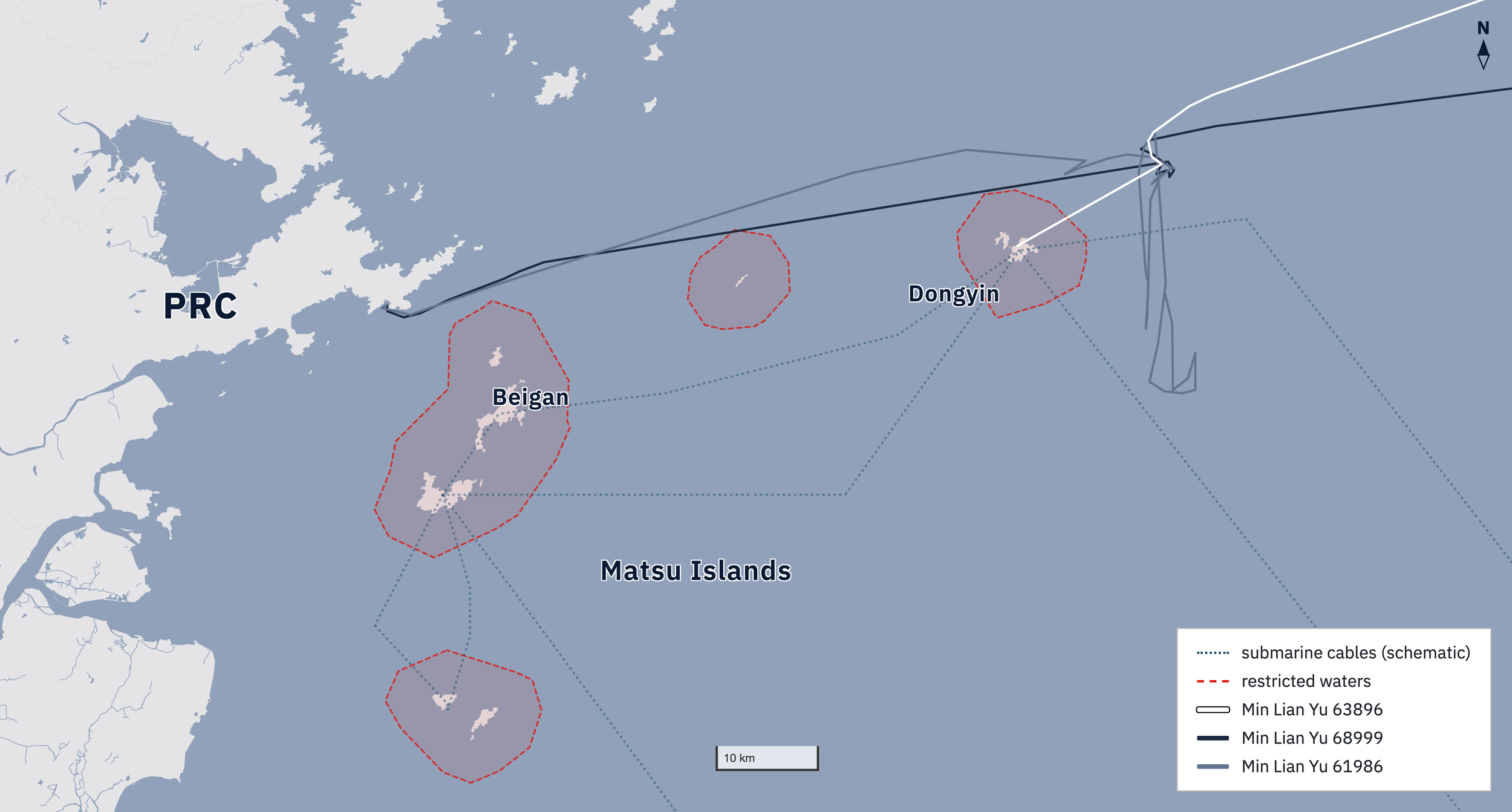
What Actually Caused the Latest Submarine Cut Near Taiwan?
“China prefers ‘invisible hybrid warfare’ (隐形混合战) over kinetic warfare. Covert irregular warfare enables China the means to quietly overwhelm its targets not only physically but economically and politically as well – all without firing a shot. The use of civilian fishing vessels not only provide plausible deniability but legitimizes China’s claims and salami-slicing tactics as lawful and just.”
China Maritime Report #52: Everything Everywhere All At Once — The Growing Complexity of PLA Amphibious Exercises
Main Findings
In August 2025, the People’s Republic of China (PRC) conducted a large-scale exercise to simulate an invasion of Taiwan. This “capstone” amphibious exercise suggests that People’s Liberation Army (PLA) training and preparations for a future Taiwan campaign are becoming more focused, realistic, and sophisticated.
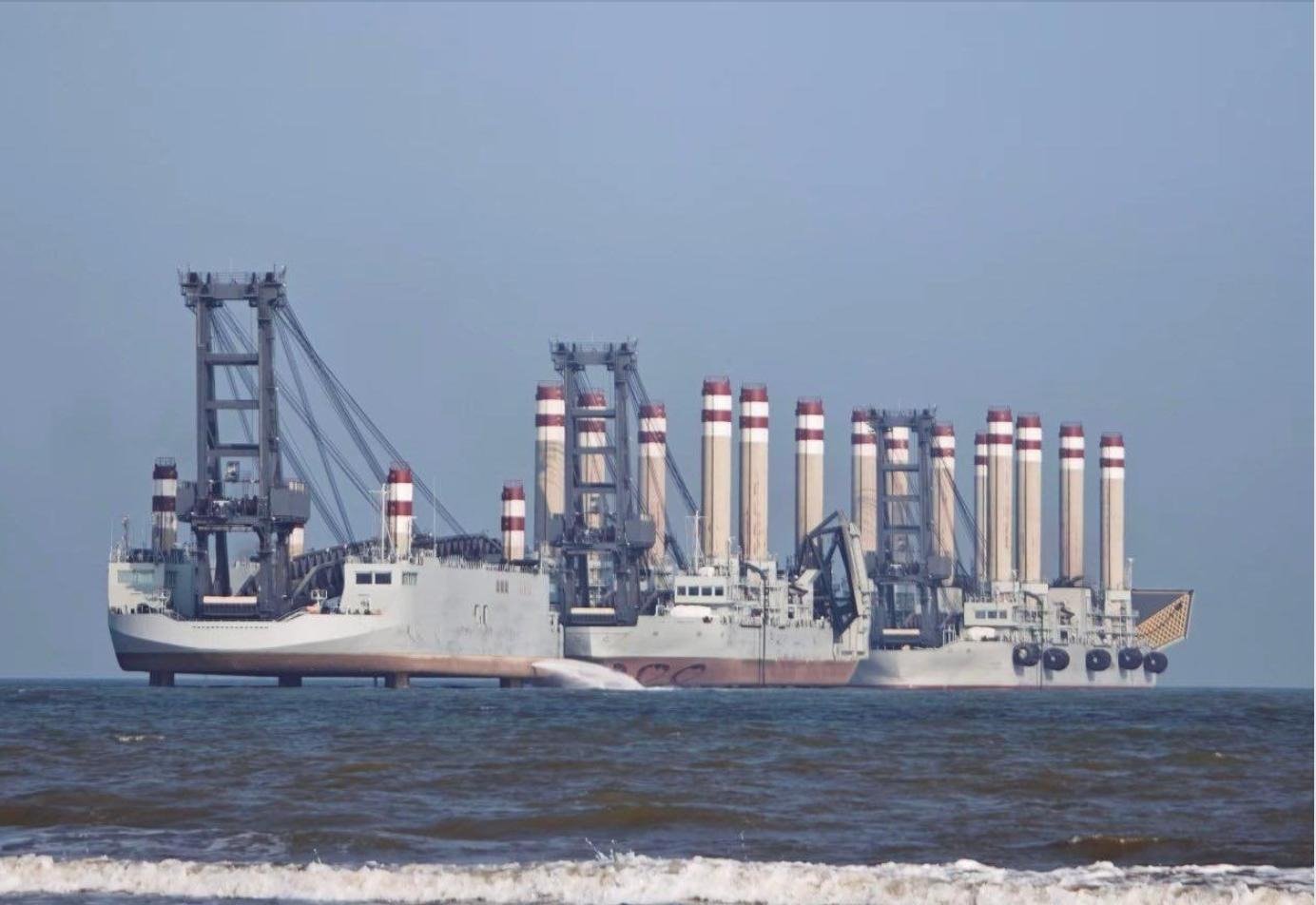
The exercise consolidated elements from previous years into a single simulated operation. It integrated a floating causeway system, anti-landing barriers and obstacles, and amphibious Landing Craft Tank (LCT) vessels that landed forces directly onto beachheads.
For the first time observed, the PLA conducted a phased exercise with simultaneous amphibious landings in three distinct locations. Exercise areas incorporated civilian aquaculture obstacles like those expected to be found along Taiwan’s coastline, increasing environmental and tactical realism.
The exercise occurred at simulated “landing locations” opposite Taiwan, particularly within the Zhangzhou-Xiamen-Quanzhou littoral zone. The locations were distributed at distance intervals comparable to likely wartime beachheads along Taiwan’s western coastline. The total distance between discrete exercise locations was approximately 360 kilometers, roughly the distance between Taipei and Kaohsiung.
Not merely hypothetical in nature, the exercise reflected a specific geographical and operational focus. It appears to be part of a larger trend whereby the PLA is mapping its exercises onto analogous geography that reflects envisioned targets.
Future research should explore the potential applications and implications of PLA efforts to train with similar distances and geometries as would be found in prospective conflict zones.
Starting this summer, observers should scrutinize future capstone amphibious exercises to better understand the PLA’s strengths, weaknesses, and underlying operational assumptions.
Maritime Executive: China's Naval Drills Show Growing Focus on Capturing Taiwan
China's military has been conducting exercises near the self-governing island of Taiwan for years, simulating naval blockades, air incursions and landings. But a round of drills conducted last fall appeared to be a much more "focused, realistic and sophisticated" simulation of an amphibious assault on the island, down to the distances between exercise locations and the conditions found near shore, according to a new analysis by satellite intelligence firm ingeniSpace and the U.S. Naval War College. The report arrives amidst news of concern within the Pentagon about the status of U.S. interceptor and long-range strike missile stocks, which would be needed to mount a defense of Taiwan.
China has debuted its new landing barges
Just to their right, a line of strange looking ships loom in the mist. The enormous ships are unmoving, raised above the waves by thick pylons. Drop-down bridges connect them to each other, the front one extending down to the sand. Jason Wang, chief executive of Ingenispace, a geospatial analysis company, said the ships were a clear sign of China’s “creativity…They can produce the ships really fast – four to six months – and get them into theatre,” Wang said. “They can also iterate improvements faster than everybody else.”